Why Senior Clients Stay Longer — If You Coach Them Right
Coaching older adults isn’t the same job as coaching a 25-year-old athlete. Here’s what senior-ready coaching actually requires, and how the right system helps trainers deliver it consistently.
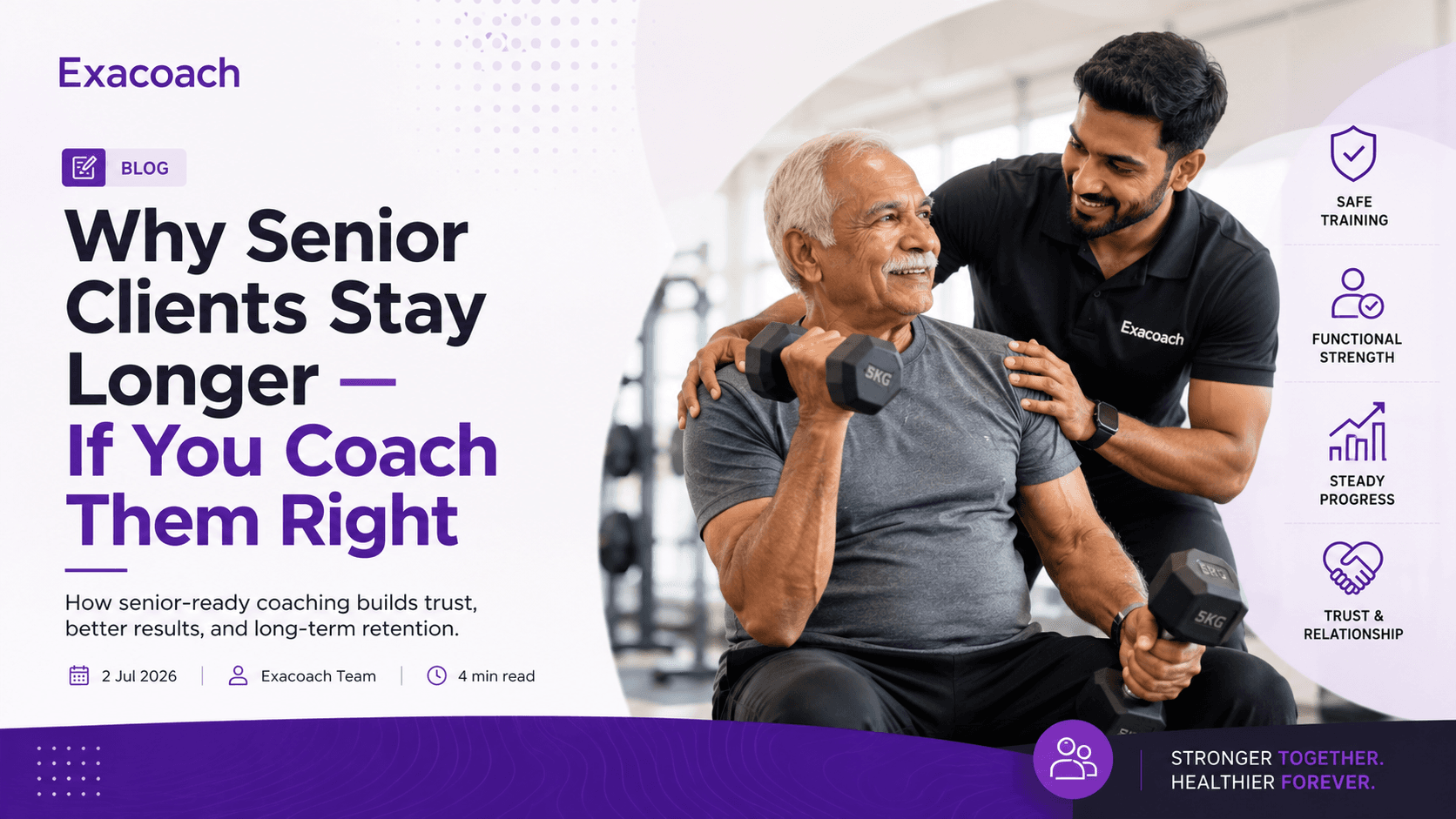
The fastest-growing segment in fitness isn’t Gen Z HIIT classes — it’s people over 60. As life expectancy rises and more seniors prioritize mobility, strength, and independence, gyms, academies, and personal trainers are being asked to serve a client base that trains very differently from a 25-year-old athlete.
That shift creates a real gap: most coaching staff were trained for performance and aesthetics, not for joint protection, medication interactions, fall prevention, or the slower, more variable progress curves of older adults. “Training the trainers” — building internal expertise in senior fitness — is becoming a competitive necessity, not a nice-to-have.
Why Senior Clients Are Different
Coaching a senior citizen isn’t just “the same program, lighter weights.” A few things change the entire approach:
- Medical context matters more. Conditions like arthritis, osteoporosis, hypertension, or past surgeries directly shape what a client can safely do.
- Progress is non-linear. A good week can be followed by a flare-up or a bad night’s sleep that changes what today’s session should look like.
- Fall prevention and functional strength often matter more than aesthetic goals — the “why” behind training shifts from looks to independence.
- Communication style matters. Trust, patience, and clear explanation build adherence more than intensity does.
Trainers who haven’t been specifically prepared for this often default to generic programming, which is where injuries — and client attrition — happen.
What “Training the Trainers” Actually Involves
A senior-fitness-ready coaching staff typically needs:
- Assessment literacy — knowing how to read mobility limitations, balance issues, and medical flags before writing a single program.
- Modified programming knowledge — regressions, tempo control, and joint-friendly exercise substitutions.
- Documentation discipline — tracking medical conditions, injuries, and changes over time isn’t optional paperwork; it’s what keeps sessions safe.
- Progress tracking built for slower timelines — measuring wins in balance, mobility, or pain reduction, not just PRs.
This is exactly the kind of structured, ongoing process that’s hard to run on a notebook or a WhatsApp thread — and exactly what a coaching platform should support.
How Exacoach Supports Senior-Focused Coaching
Exacoach wasn’t built exclusively for senior fitness, but its core structure maps well onto what senior-focused coaching actually needs:
- Detailed client intake — PT client profiles capture medical conditions, injuries, and notes upfront, so every coach on the team sees the same safety context before a session.
- Body measurement tracking over time — recording weight, body fat percentage, and other metrics at each check-in makes slow, real progress visible instead of invisible.
- Custom goal templates — goals can be tracked as numbers, ratings, percentages, or simple yes/no milestones, which suits functional outcomes (“can stand from a chair unassisted”) better than a generic weight-loss target.
- Structured weekly plans — coaches can build out sessions with exercise sections, notes, and pain notes per exercise, keeping modifications documented and consistent across visits.
- Coach assignment per client — so a senior client keeps working with a coach who understands their history, rather than starting over with someone new each session.
None of this replaces proper training for coaching staff — but it gives a trained coach the infrastructure to apply that training consistently, and gives a business owner visibility into whether it’s actually happening across their team.
The Business Case
Serving senior clients well isn’t just a service offering — it’s a retention engine. Older clients who feel safe, understood, and see steady progress tend to stay far longer than clients chasing short-term transformation goals. For gyms and PT businesses, that means:
- Longer client lifetime value
- Word-of-mouth referrals within tight-knit senior communities
- A genuine point of differentiation in a crowded fitness market
Investing in trainer education for this segment — and backing it with a system that actually tracks medical notes, modifications, and progress — turns “we work with seniors” from a claim into a demonstrable standard of care.
Getting Started
If your academy, gym, or PT business is expanding into senior fitness, the two things that matter most from day one are: properly prepared coaches, and a system that holds the details — medical flags, modifications, and progress — so nothing depends on memory. Exacoach’s client profiles, goal tracking, and coaching program tools are built to carry exactly that kind of detail across every session, every coach, every week.